
MoldIQ: autonomous mold design with AI
A closed-loop engineering platform that proposes mold architecture, cooling and the process window from a 3D product model, and becomes more accurate with every production run using live machine data.
- 60%shorter design (target)
- < 5 minpreliminary design (target)
- R&Dstage
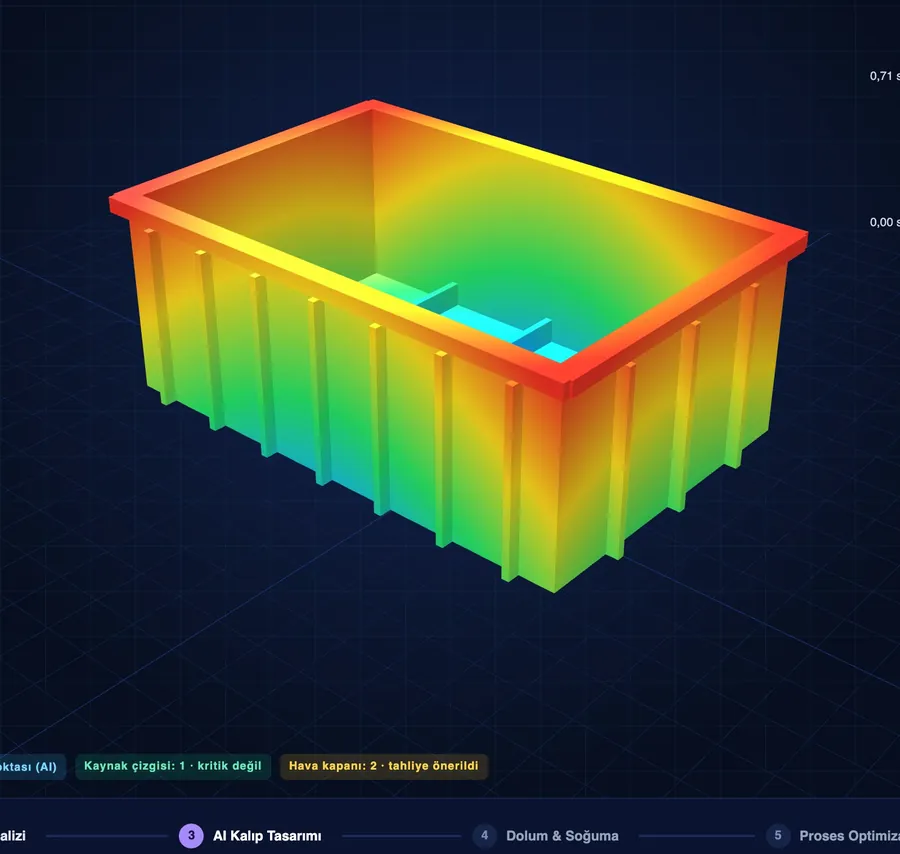
Autonomous mold design with AI
Closed-loop engineering from product model to mold, and from mold to the smart factory.
Today
- Design cycles that take weeksMold design depends on expert knowledge and is largely manual.
- Cost of trial shots and revisionsProblems often surface only after the mold is built.
- Expensive, slow simulationFlow analysis software needs experts, licenses and hours of computation.
- Design disconnected from the floorReal machine data from production never feeds back into the next design.
The MoldIQ vision
Upload a 3D product model; AI proposes the mold architecture, cooling and process window in minutes.
A closed-loop engineering platform that gets smarter with every production run using live machine data.
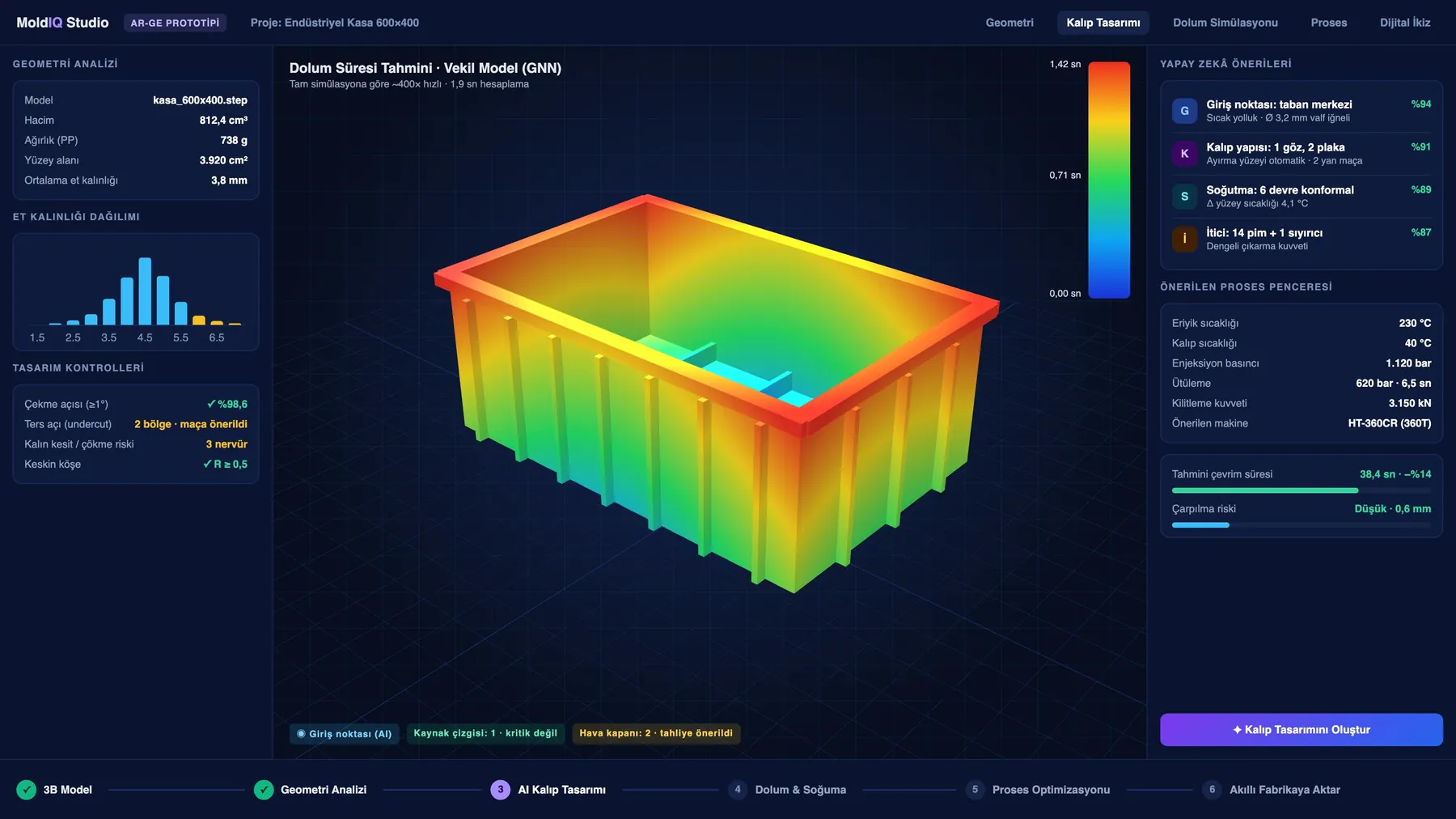
3D model input
STEP / IGES / STL upload, automatic meshing
Geometry analysis
Wall thickness, draft angle, undercuts and sink risk
AI mold design
Parting surface, cavities, gate location, cores and ejectors
Fill & cooling prediction
Fill and warpage in seconds with a surrogate model
Process optimization
Temperature, pressure, timing and machine selection
Handover to Smart Factory
Recipe goes to the machine, real data returns to the model
Closed-loop learningReal process and quality data from Smart Factory is fed back to the models through a digital twin; every new mold is designed more accurately than the last.
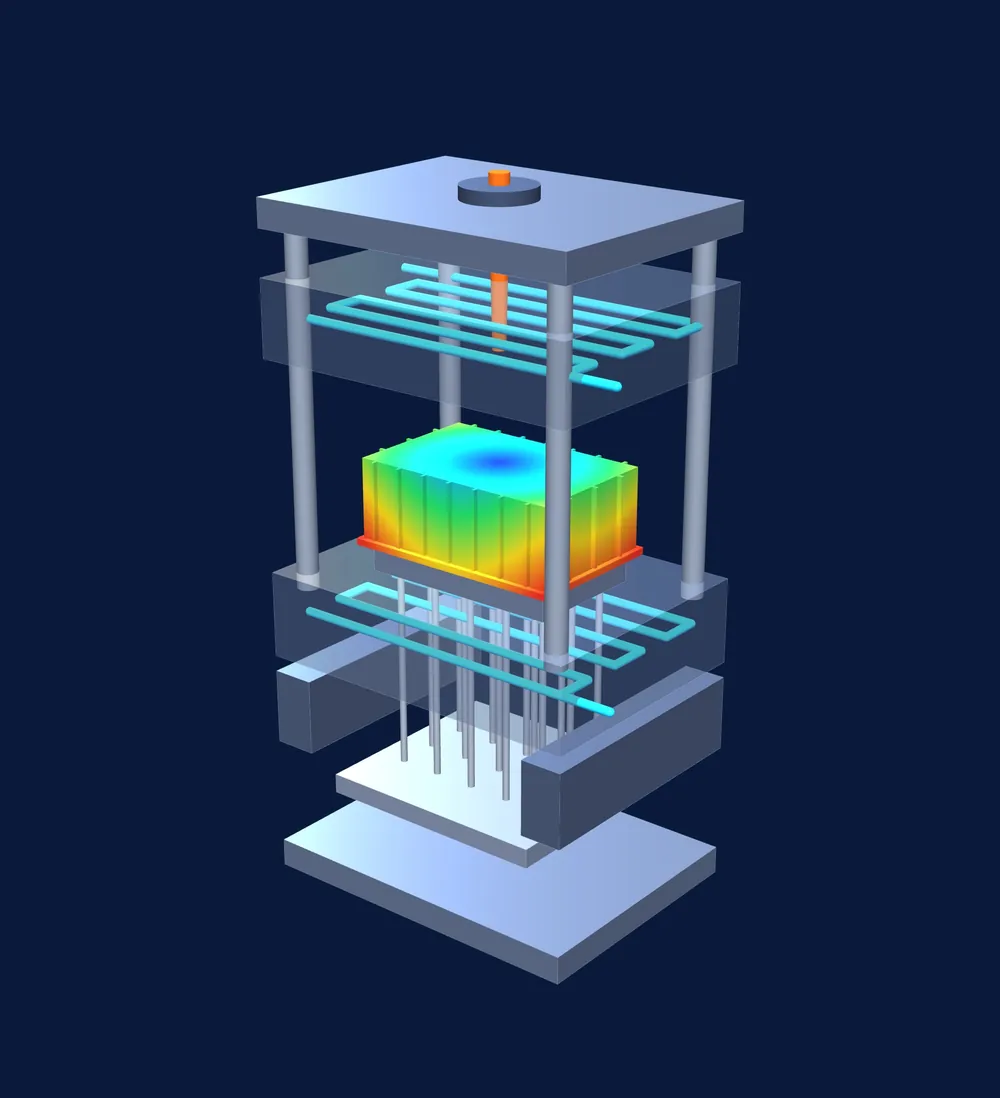
- Geometric deep learningGraph neural networks (GNN) learn directly on the part mesh and suggest gate locations and parting surfaces.
- Physics-informed surrogate modelsPredict fill, cooling and warpage far faster than classical simulation.
- Generative designAutomatic generation of conformal cooling channels and runner geometry.
- Bayesian optimization & digital twinFinds the process window with few trials and calibrates with field data.
Dataset & geometry analysis
TRL 3 → 4Surrogate simulation & mold recommendation engine
TRL 5Field validation at a pilot factory
TRL 6 – 7Productization & SaaS launch
TRL 8The project is structured to fit TÜBİTAK TEYDEB and similar R&D funding programs. Targets are values projected within the R&D plan.
Questions about MoldIQ
If you cannot find the answer here, send us your question and the relevant specialist will get back to you.
Ask a questionIs MoldIQ available now?
MoldIQ is in the R&D stage. Phase 1 (dataset and geometry analysis) starts in Q4 2026; pilot factory validation is targeted for late 2027, and productization and SaaS launch for 2028. Contact us about pilot partnerships.
Which file formats does it accept?
3D product models in STEP, IGES and STL formats; the mesh is generated automatically.
What does the AI recommend?
Parting surface, cavity count, gate location, core and ejector placement, cooling channels, and a process window covering temperature, pressure, timing and machine selection.
How is it different from classical flow simulation?
Physics-informed surrogate models predict filling, cooling and warpage far faster than classical simulation, within seconds. Real process data from Smart Factory is fed back to the models through a digital twin.
What gains are targeted?
Targets projected in the R&D plan: 60% shorter mold design time, 50% fewer trial shots, 10–15% cycle time improvement and under 5 minutes from product model to preliminary design.
Other solutions
Kingstur
A global booking platform bringing flights, buses, hotels, tours and transfers under one roof.
AI, transportationGÖZCÜ
An AI platform that detects accidents on highway cameras within seconds.
IoT, Industry 4.0Smart Factory
Real-time data from injection molding machines, MRP and advanced reporting.
Let's talk about MoldIQ
Tell us what you need, and we will get back to you with a solution architecture and proof of concept (PoC) tailored to your organization.